Stern of a boat
Short answer: The stern is the back, or aft end, of a boat. On a boat with a transom stern, that end finishes in a flat surface facing aft, and that surface is the transom. A canoe stern comes to a point and has no flat transom.
Pick a part on the drawing, or a name in the list, to see what it is.
Which part is marked in red?
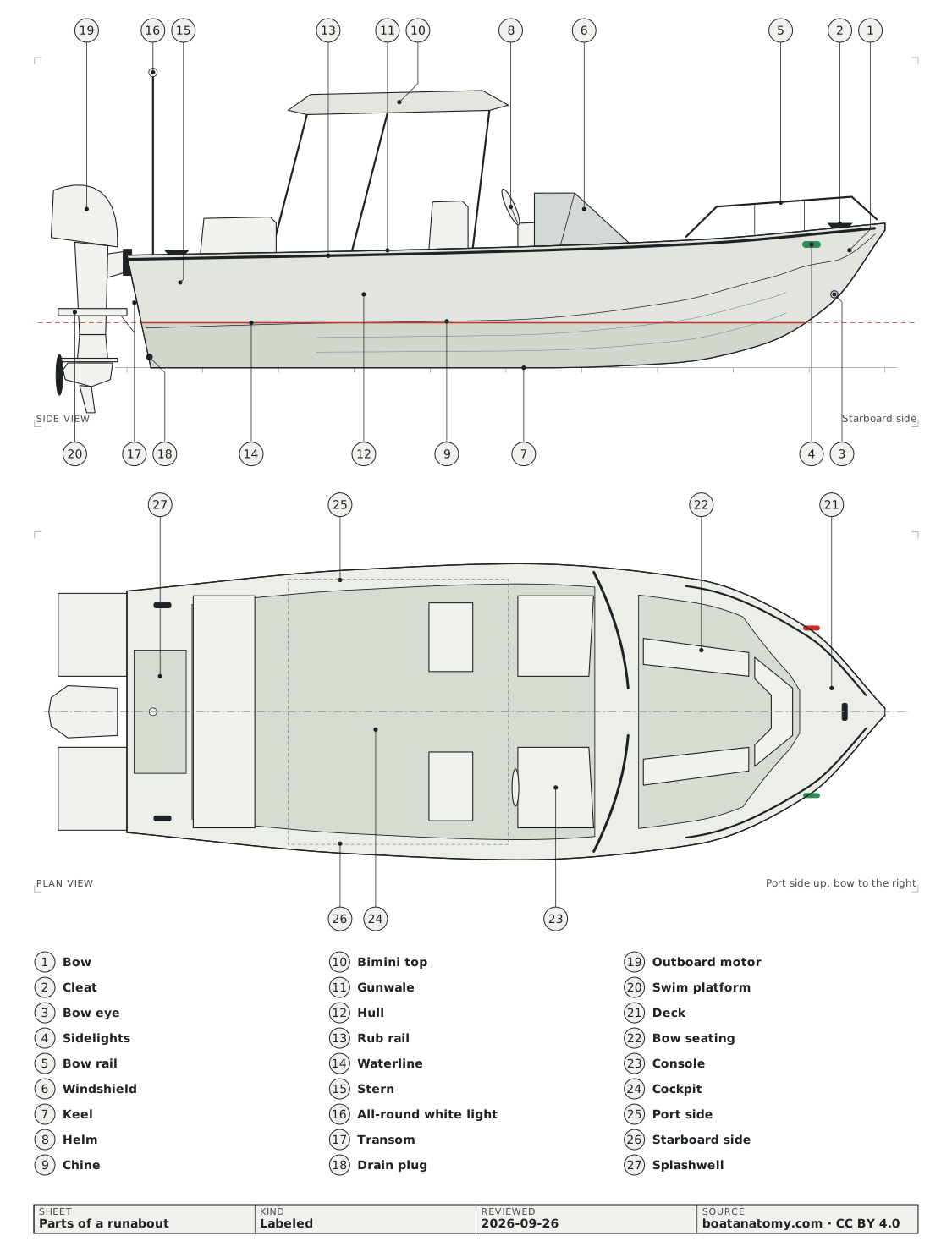
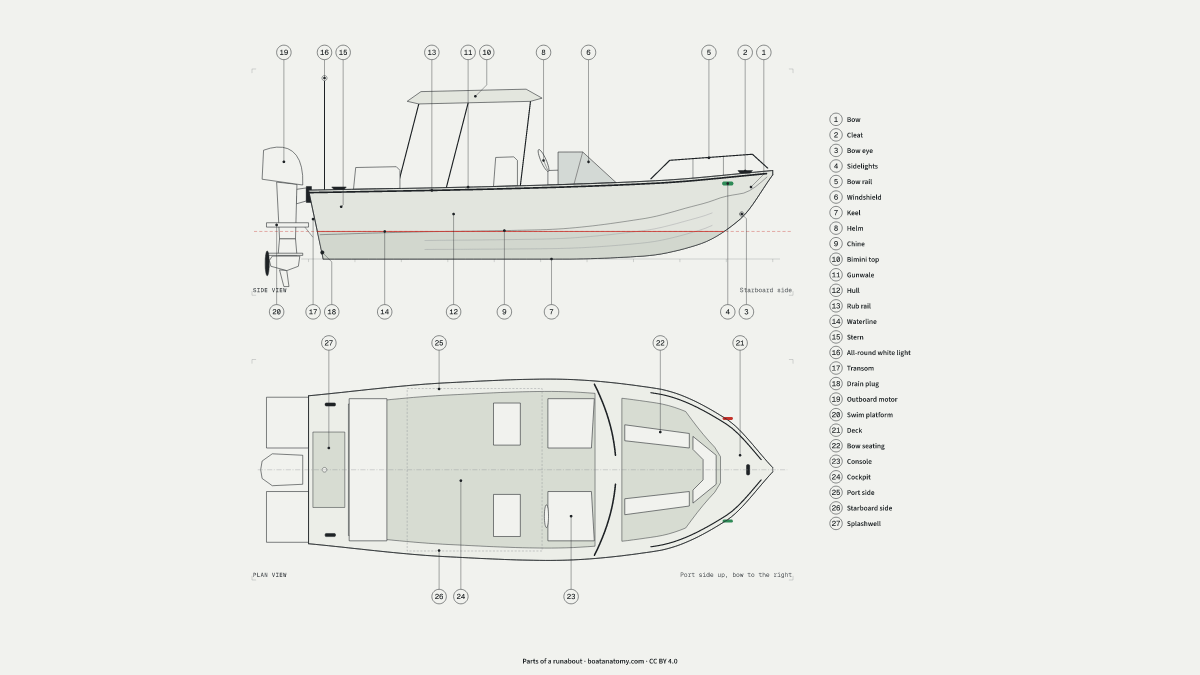
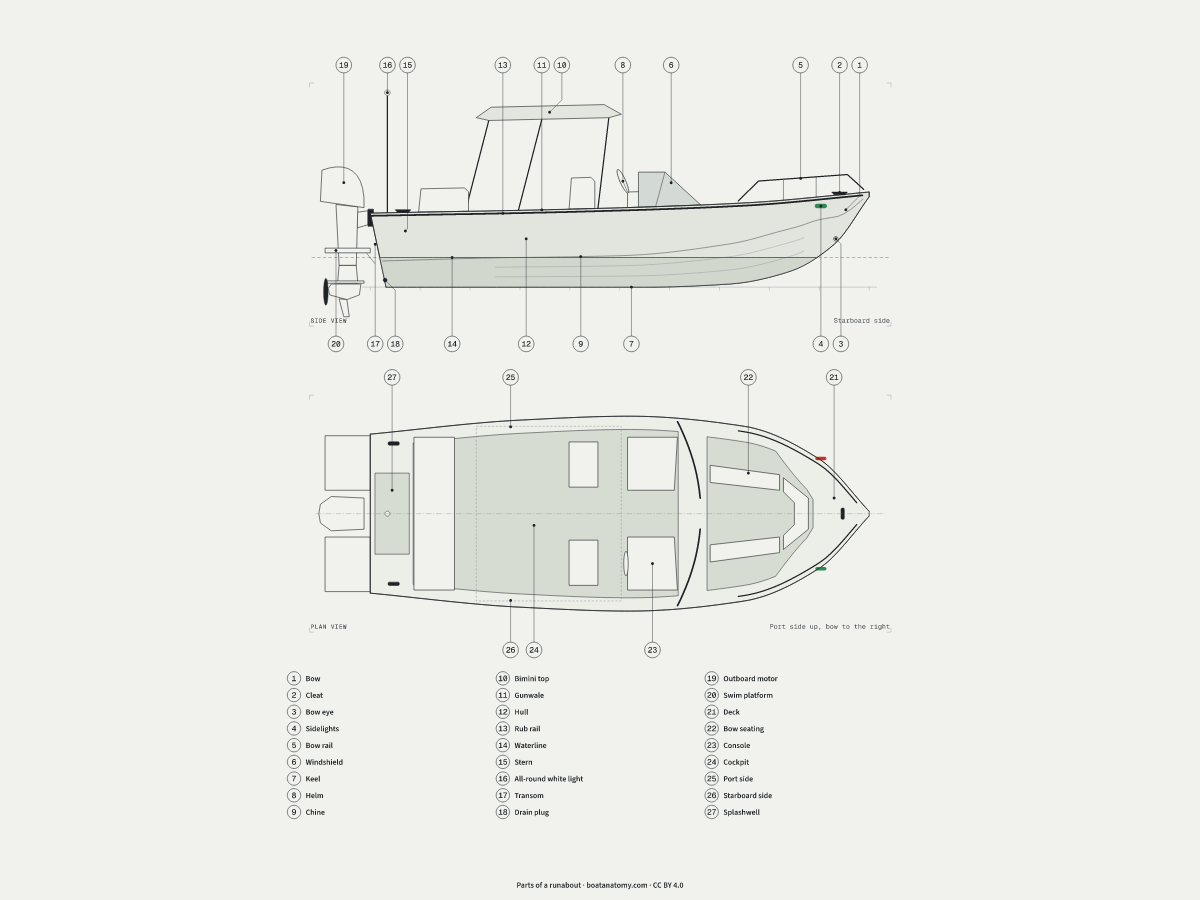
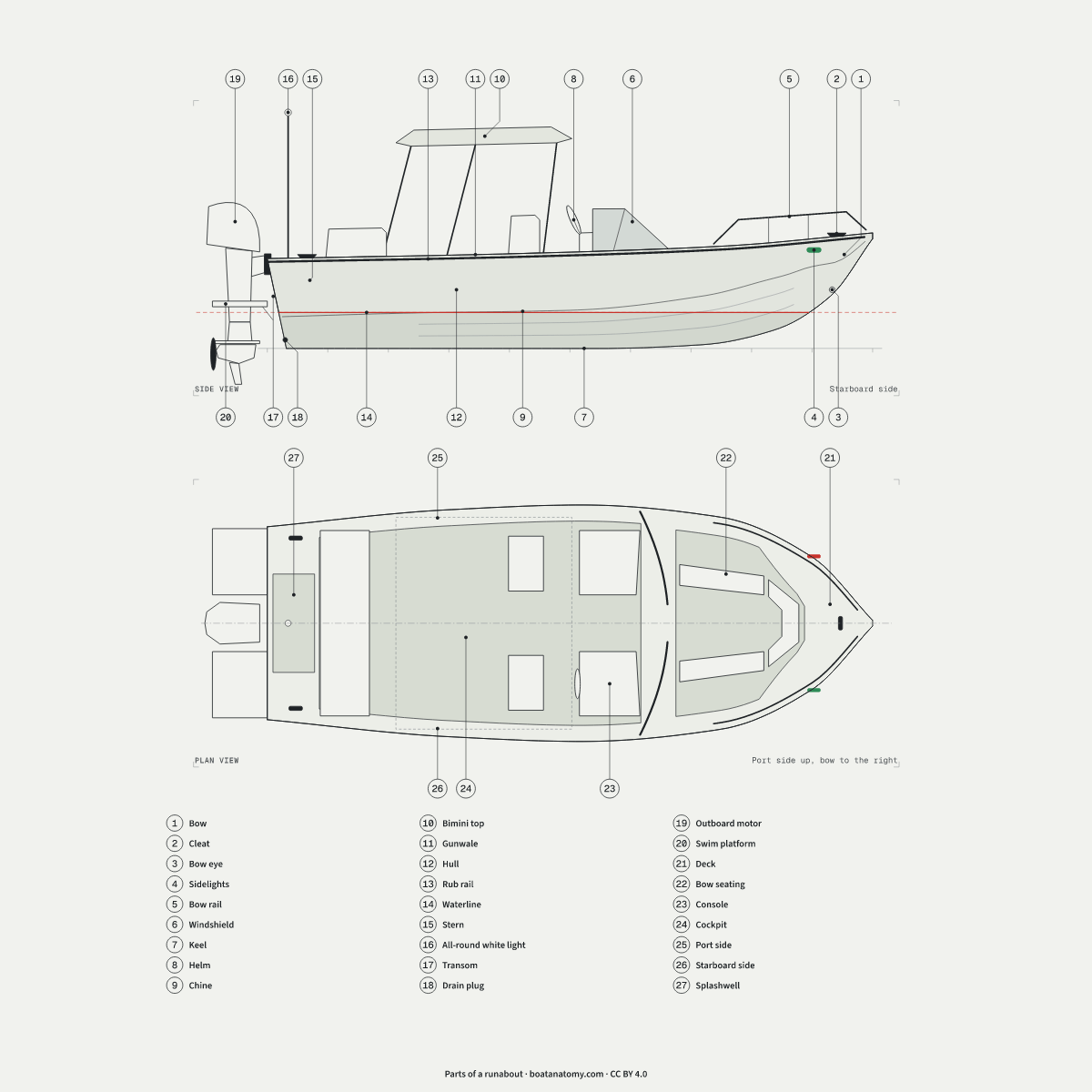
Parts of a runabout, side view and plan view Drawn to scale Checked
The 8 parts on this drawing
- Cleat
A cleat is a horned fitting on deck that lines are made fast to.
Also called bow cleat, stern cleat
- Stern
The stern is the back, or aft end, of a boat.
Also called back, aft end
- All-round white light
This pole carries an all-round white light, which shows over an unbroken arc of 360 degrees.
Also called stern light
- Transom
The transom is the surface across the stern of the boat that faces aft.
- Drain plug
The drain plug is a plug or valve low in the transom that controls the draining of water from the hull.
Also called transom drain plug, bung
- Outboard motor
An outboard motor is a self-contained engine, gear case and propeller unit mounted on the transom.
Also called outboard, outboard engine
- Swim platform
The swim platform is a low platform at the stern for getting on and off the boat from the water.
Also called swim step
- Splashwell
The splashwell, or motorwell, is the walled area just inside the transom that stops water coming through the motor cut-out from reaching the passenger area.
Also called motor well
Stern shapes
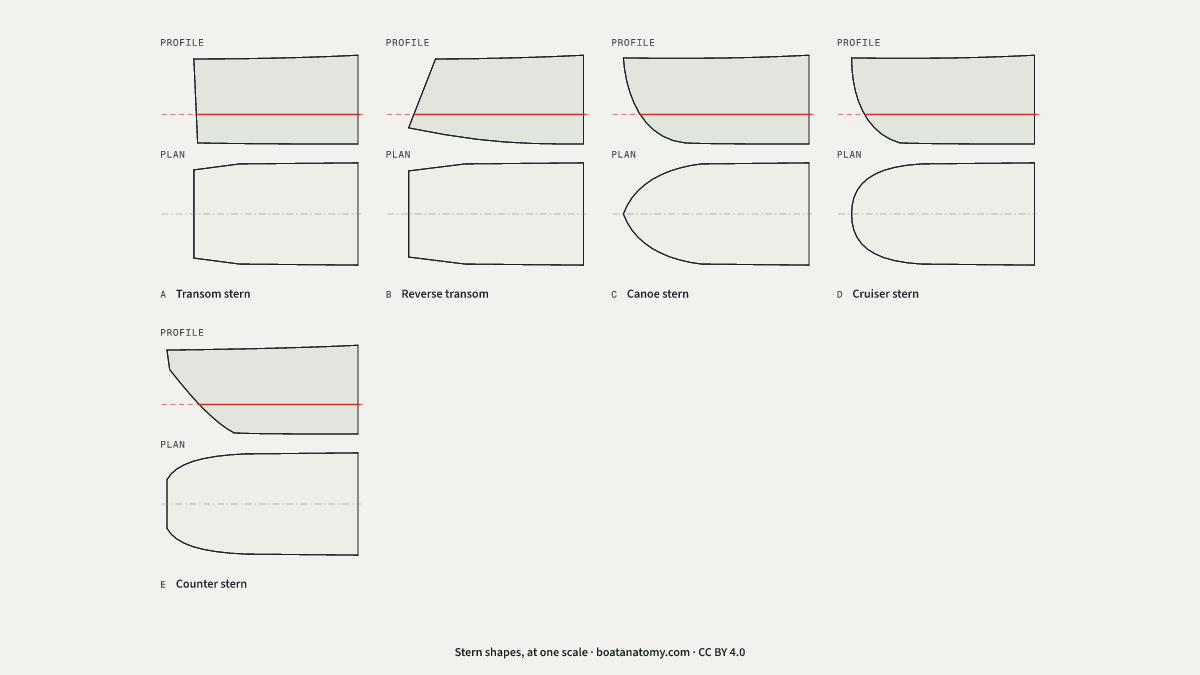
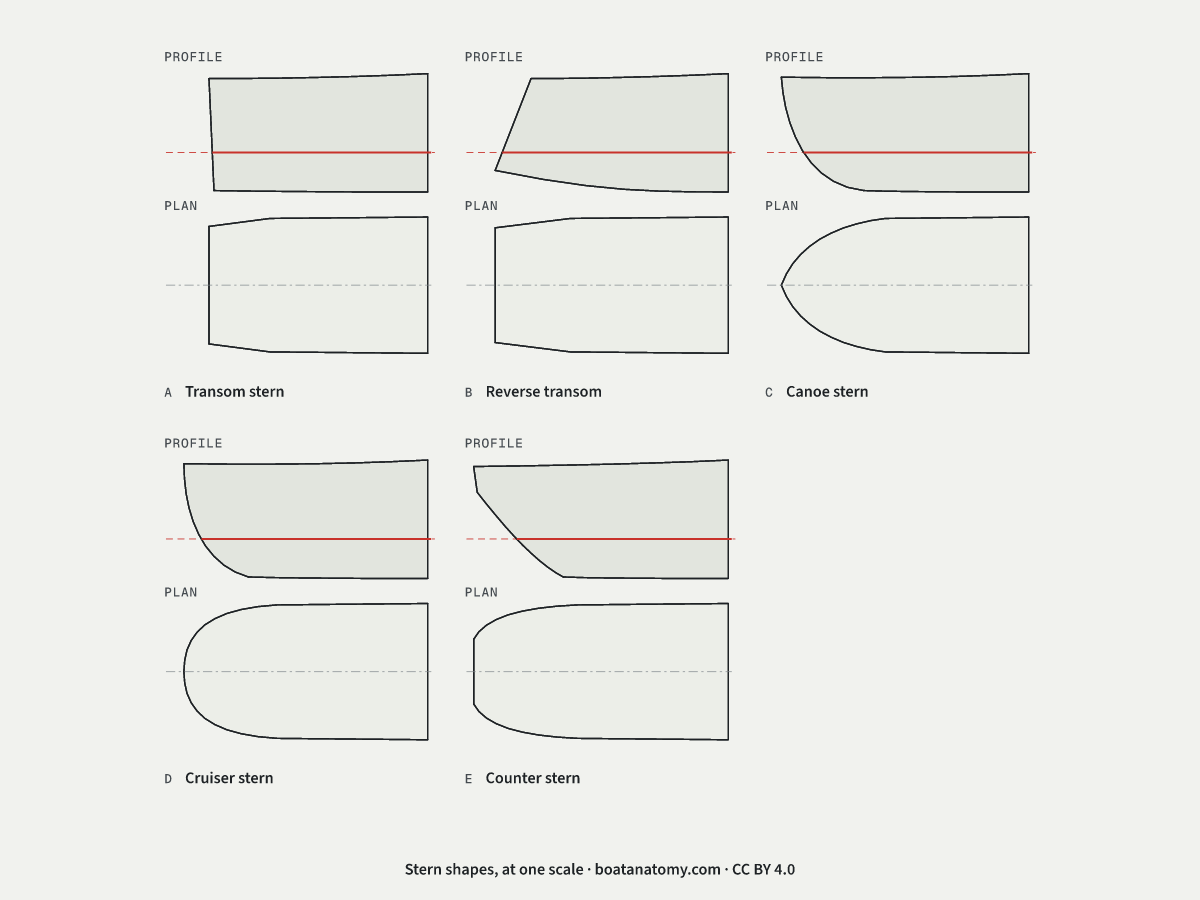
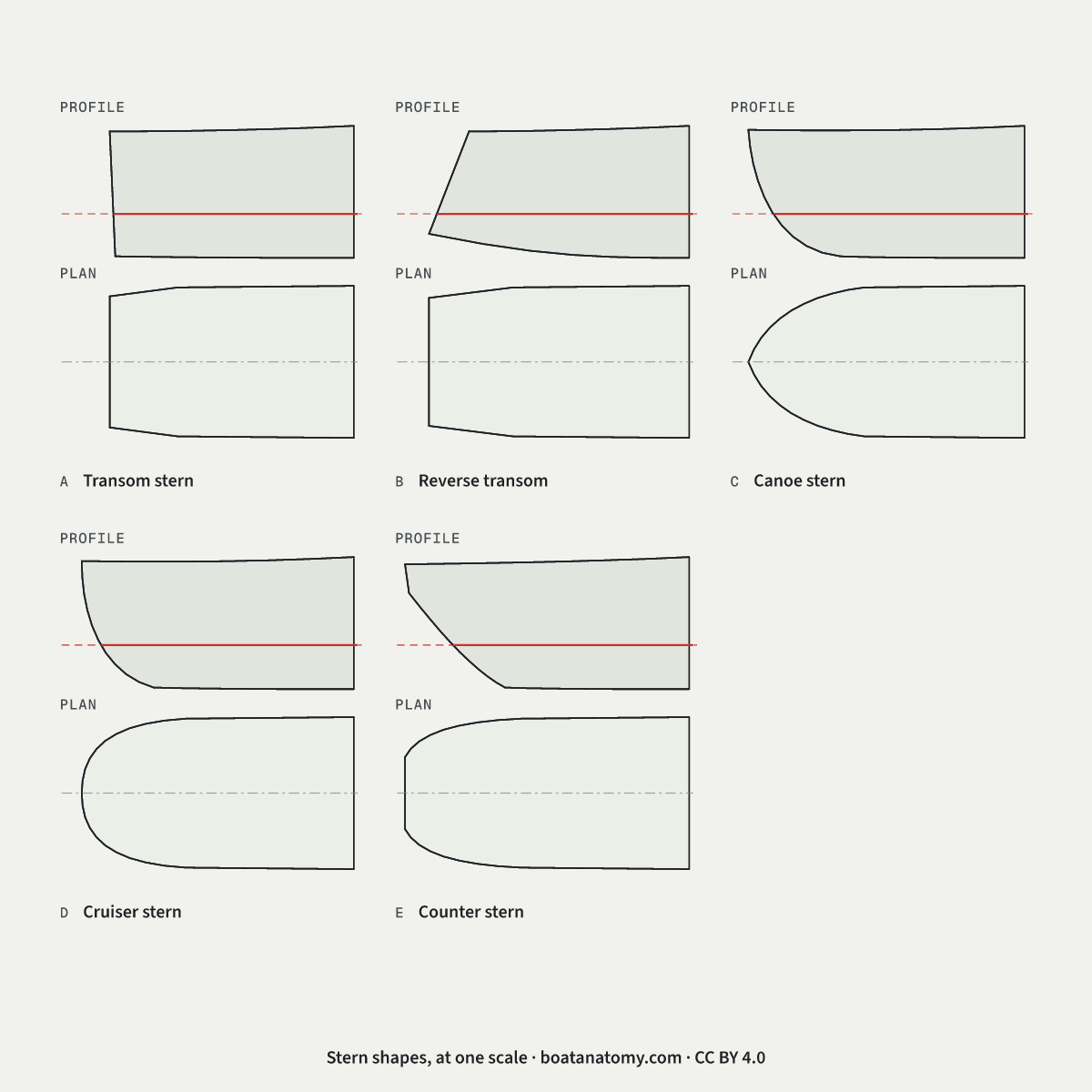
Five stern shapes drawn in profile and plan at one scale, with the waterline at the same height.
-
A Transom stern
A transom stern ends in a flat, or nearly flat, surface across the back of the boat.
Also: square stern
-
B Reverse transom
A reverse transom leans forward at the top, so the stern slopes forward from the waterline up to the deck.
Also: sugar-scoop stern
-
C Canoe stern
A canoe stern comes to a point much like the bow, so the boat is a double-ender with no flat transom.
Also: double-ender, pointed stern
-
D Cruiser stern
A cruiser stern is rounded, with a convex profile, and shows less flat surface at the back than a transom stern.
Also: rounded stern
-
E Counter stern
A counter stern extends aft above the waterline in a long overhang.
Also: counter
Stern shapes One scale across the sheet Checked
Terms often confused
SternTransomAft
Stern names the back end of the boat, transom names the surface across it that faces aft, and aft is the direction toward the stern.
Stern of a boat in more detail
The stern is the after end of a boat, the whole region at the back, and the ITTC dictionary takes it from the keel line up to the top of the hull. Anything toward it lies aft, so on the runabout above the motor sits aft of the transom and the helm sits well forward of the stern. Anything behind the boat lies astern, and a boat going astern is moving backward.
A place, a surface and a direction
Stern, transom and aft get used as if they meant one thing. Stern is a place, transom a surface, aft a direction. Federal boat regulations define the transom as the surface at the stern that projects or faces aft. A boat can therefore have a stern without any transom: a canoe stern comes to a point much like the bow, which makes the boat a double-ender.
What sits at the back of an outboard boat
The highlighted parts on the drawing are the ones you meet at the back of a typical outboard runabout. The outboard motor is a self-contained engine, gear case and propeller, mounted on the transom. The swim platforms on either side of it give you a low step for climbing aboard from the water. Low on the transom, the drain plug controls the draining of water from the hull. On its pole above the cockpit, the white light is an all-round light, visible over the full 360 degrees.
Other boats are driven from the stern in other ways. A sterndrive, also called an inboard/outboard, has its engine inside the hull, joined through the transom to a drive unit outside it. An inboard engine turns a shaft running out through the bottom to the propeller, and a rudder behind it steers.
Five stern shapes
The row of shapes below the drawing shows five sterns on hulls of one length, with the waterline at the same height in each. A transom stern stops at a flat or nearly flat surface across the back. A reverse transom leans the other way, forward at the top, so the stern slopes forward from the waterline to the deck. A counter stern carries a long overhang aft above the waterline, and a cruiser stern is rounded, with a convex profile and less flat surface at the back.
Compare the plan views as well as the profiles. The canoe and cruiser sterns narrow toward the back, while the transom and reverse transom keep much of their width to the end.
Common questions
What is the back of a boat called?
The back of a boat is the stern. Anything toward it is aft, and on many boats the back ends in a flat surface called the transom.
What is the difference between the stern and the transom?
The stern is a region, the whole after end of the boat. The transom is one surface in that region: federal rules define it as the surface at the stern projecting or facing aft.
What does astern mean?
Astern means behind the boat. A boat going astern is moving backward, in reverse.
What is a double-ended boat?
A double-ender has a bow and stern of similar shape. With a canoe stern, the stern comes to a point much like the bow, with no flat transom across it.
What is a sterndrive?
A sterndrive is a drive with its engine inside the hull, joined through the transom to a drive unit outside it. It is also called an inboard/outboard.
Print and practice
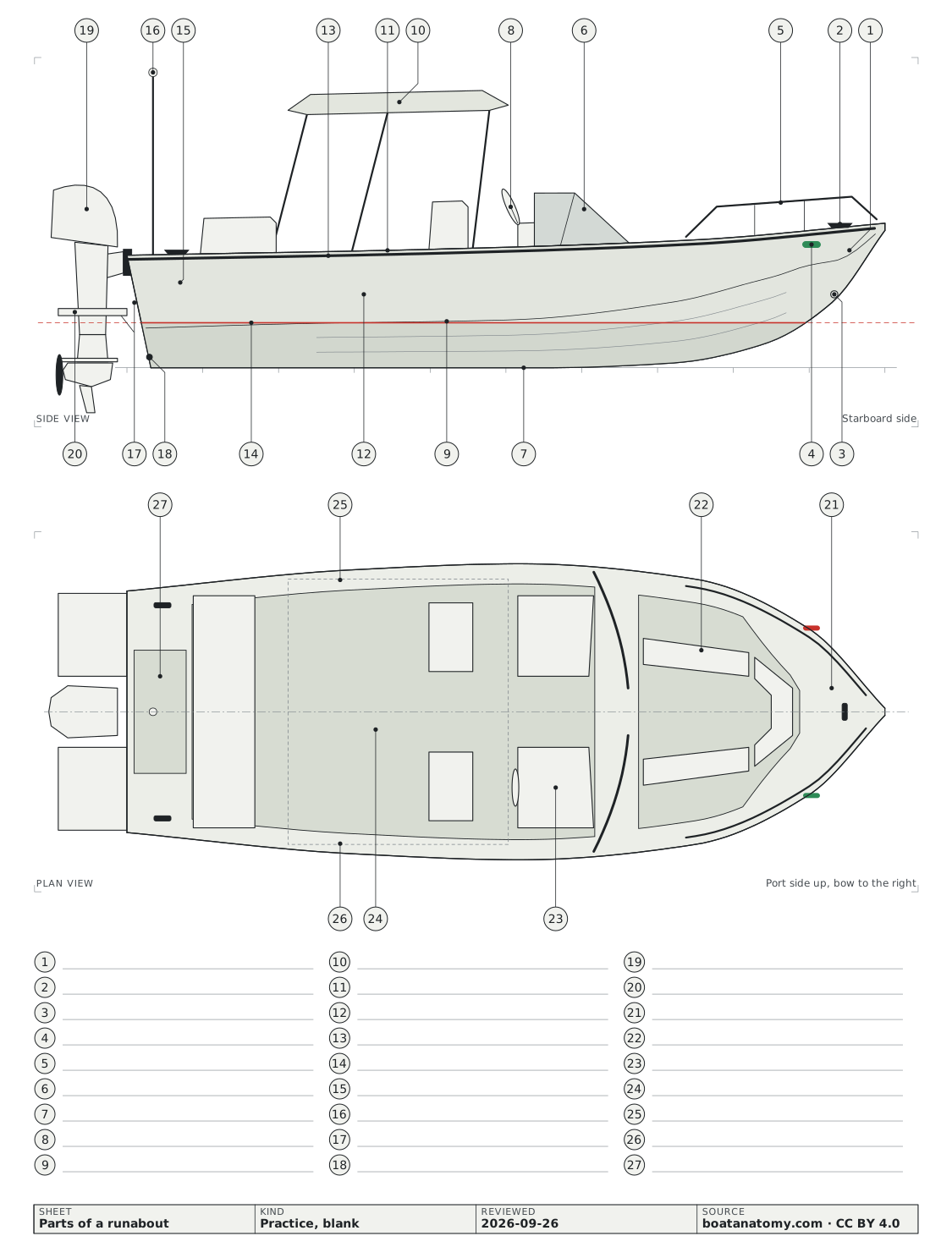
All worksheets- Parts of a runabout Labeled sheet Blank sheet to fill in