Keel of a boat
Short answer: The keel is the backbone of a hull, running fore and aft along the centerline at the bottom. The word also names the fin below a sailboat’s hull, which resists the sideways drift called leeway and, on many sailboats, carries ballast.
Pick a part on the drawing, or a name in the list, to see what it is.
Which part is marked in red?
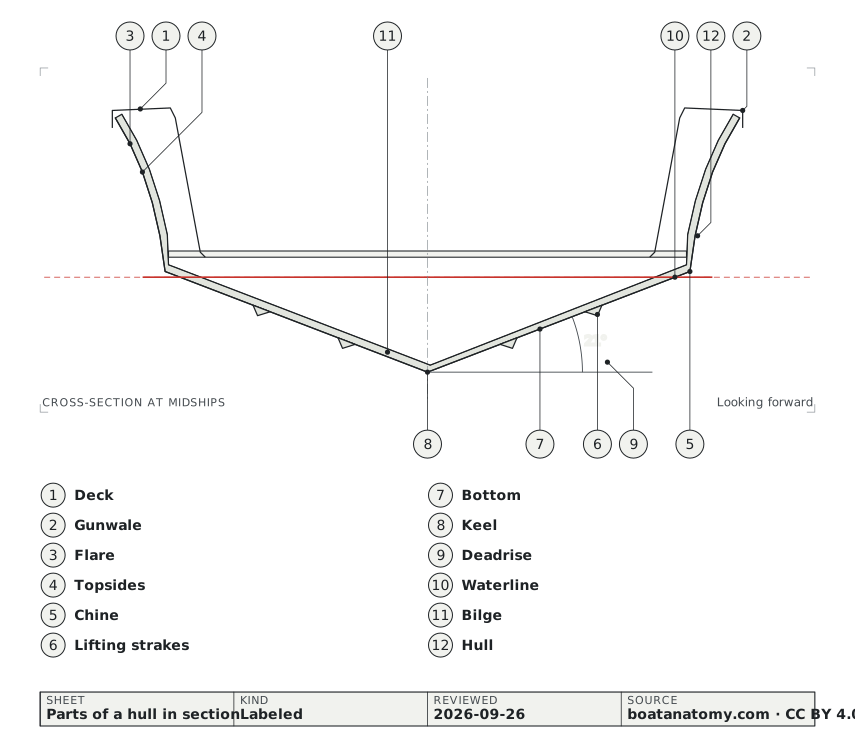
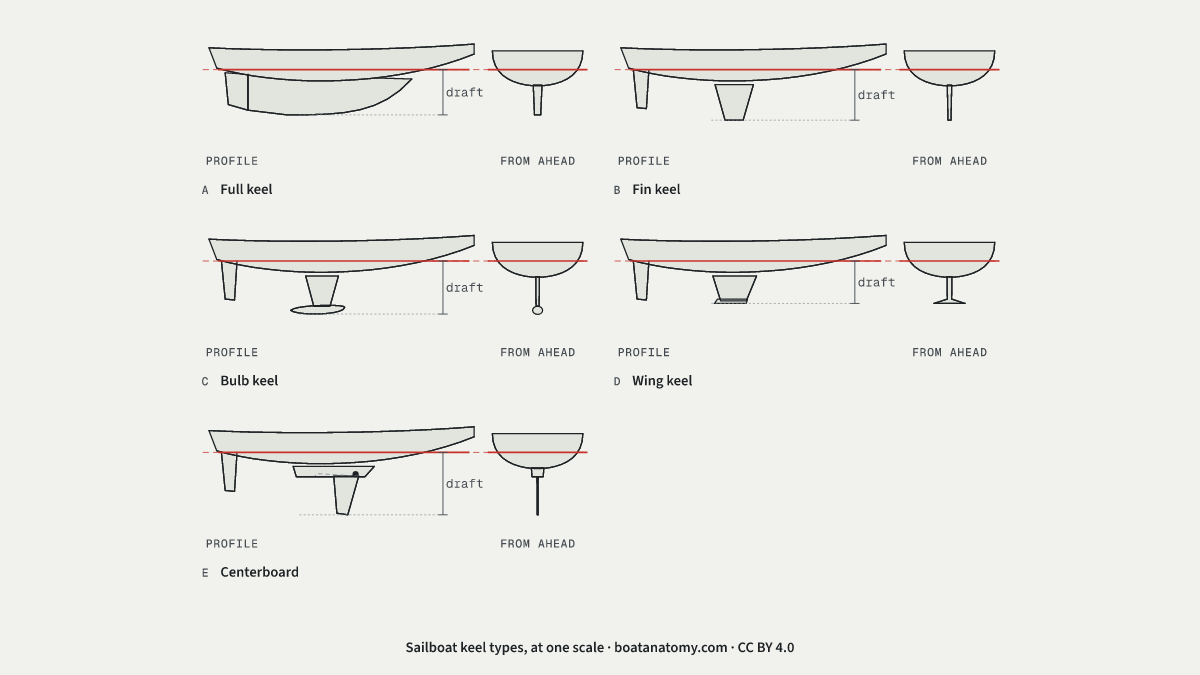
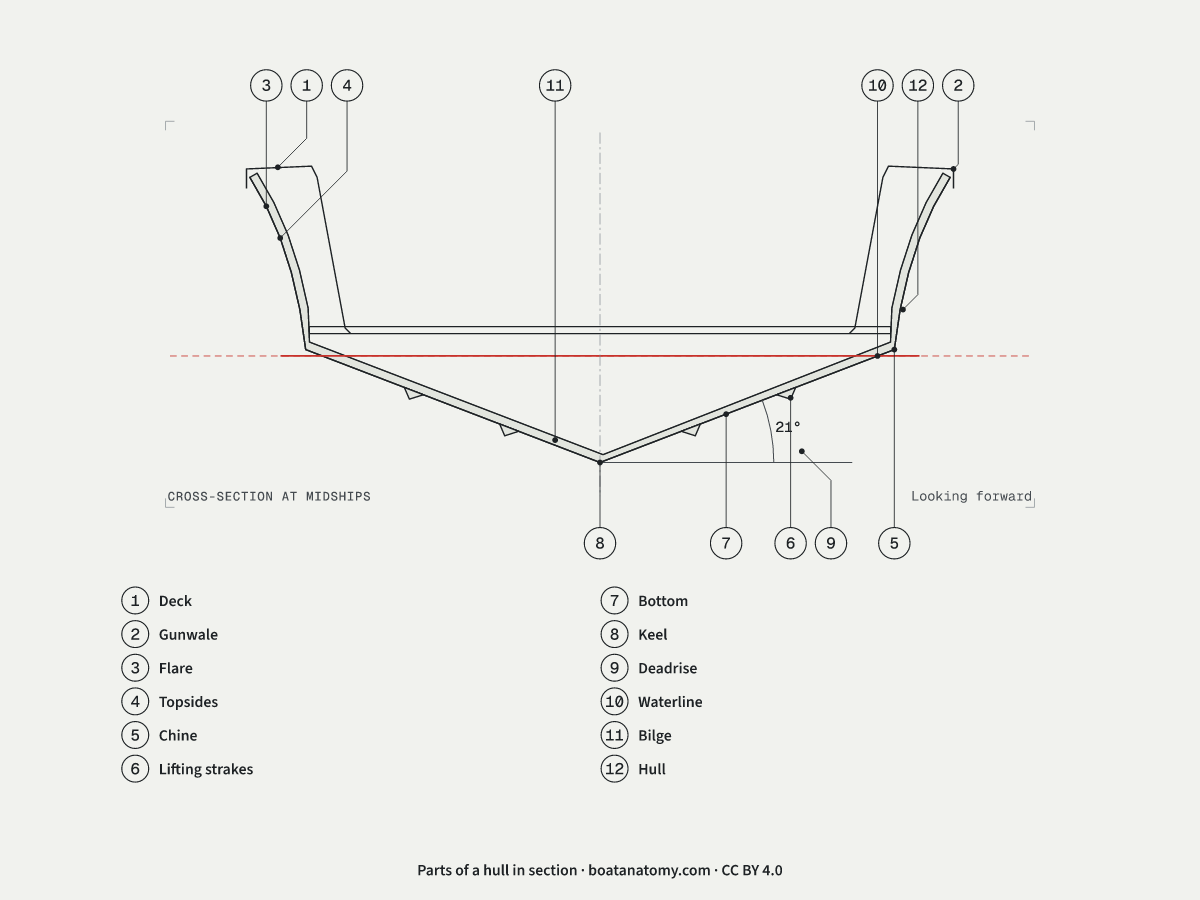
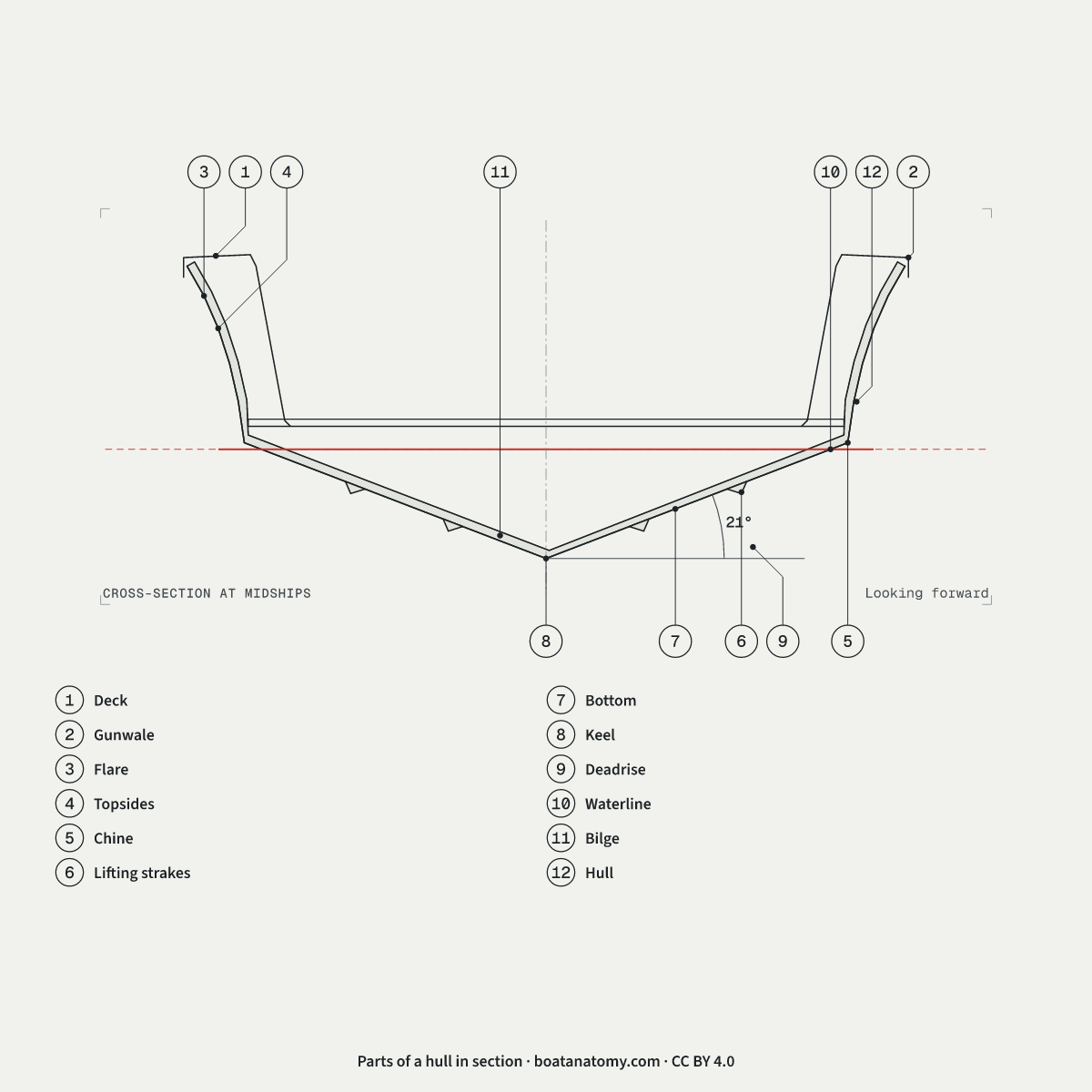
Parts of a hull in section, cross-section at midships Drawn to scale Checked
The 4 parts on this drawing
- Chine
The chine is the corner along the hull where the bottom meets the side.
Also called hard chine
- Bottom
The bottom is the underside of the hull, which meets the sides at the chines.
Also called hull bottom
- Keel
The keel is the backbone of the hull, running fore and aft along the centerline at the bottom.
- Deadrise
Deadrise is the angle between the bottom of the hull and a horizontal line, seen in a cross-section.
Also called deadrise angle
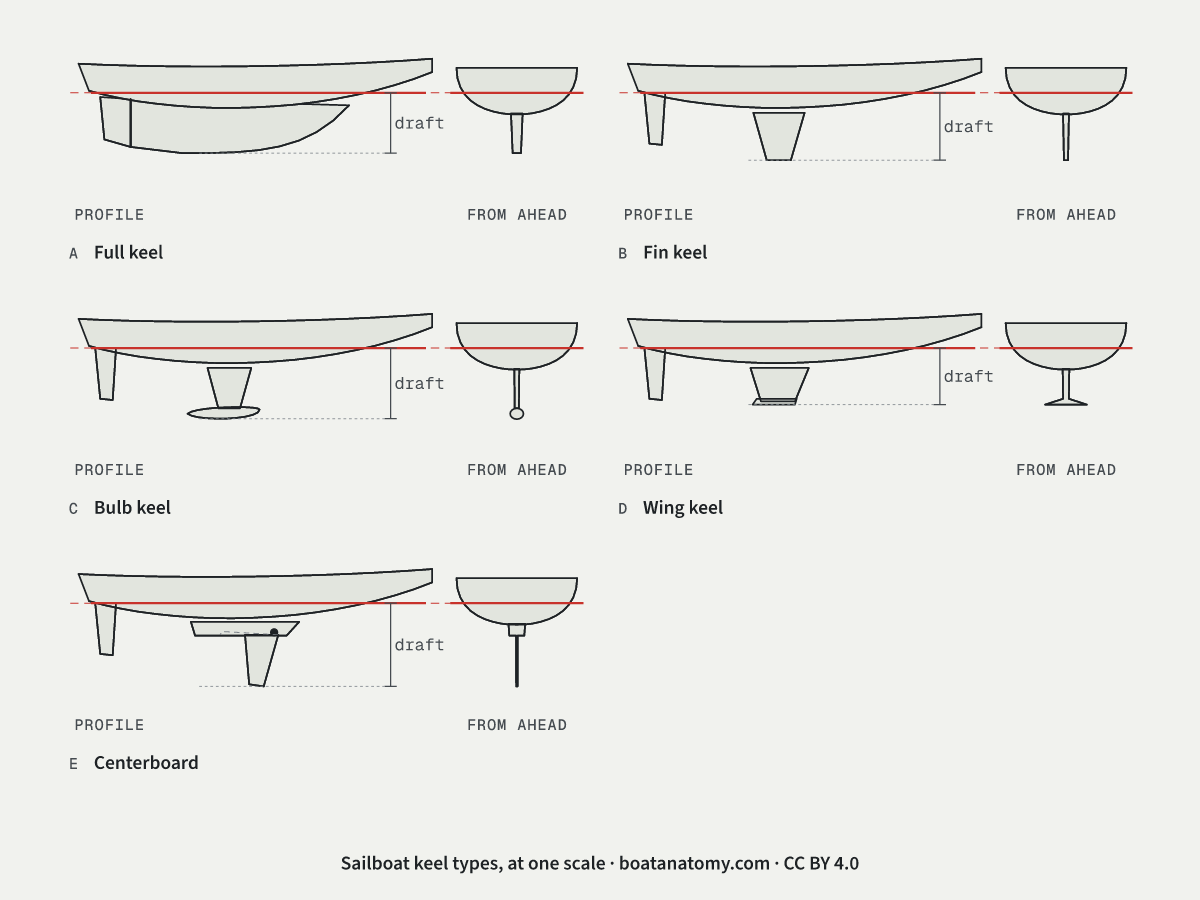
Sailboat keel types
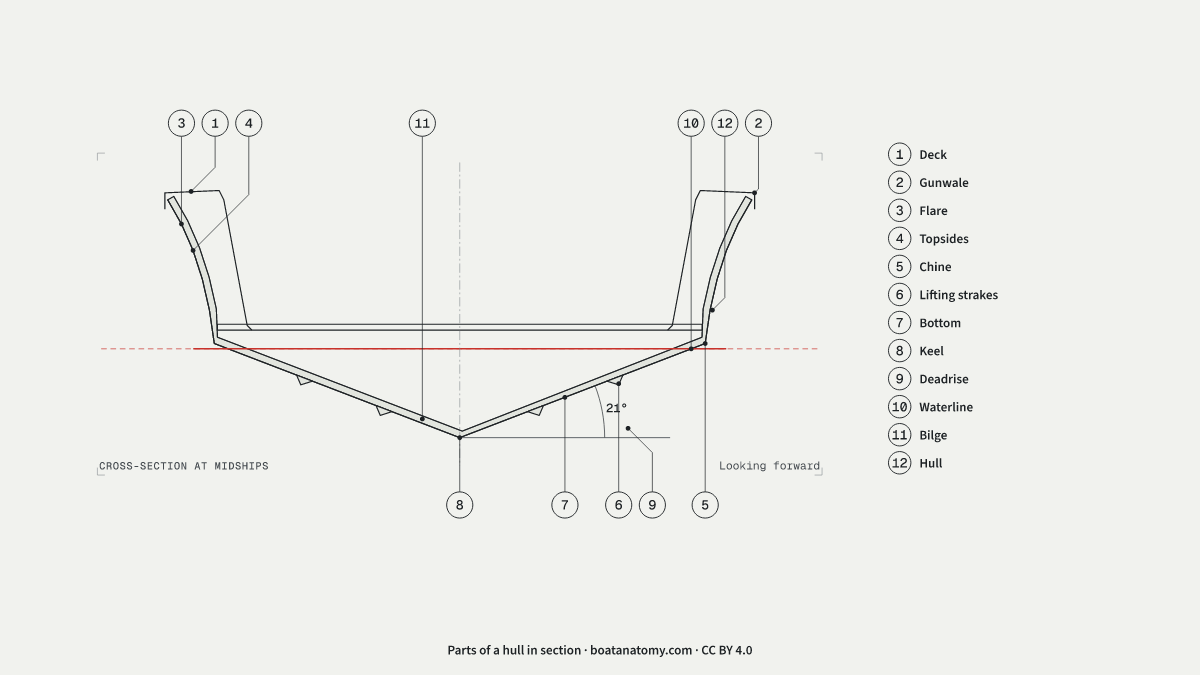
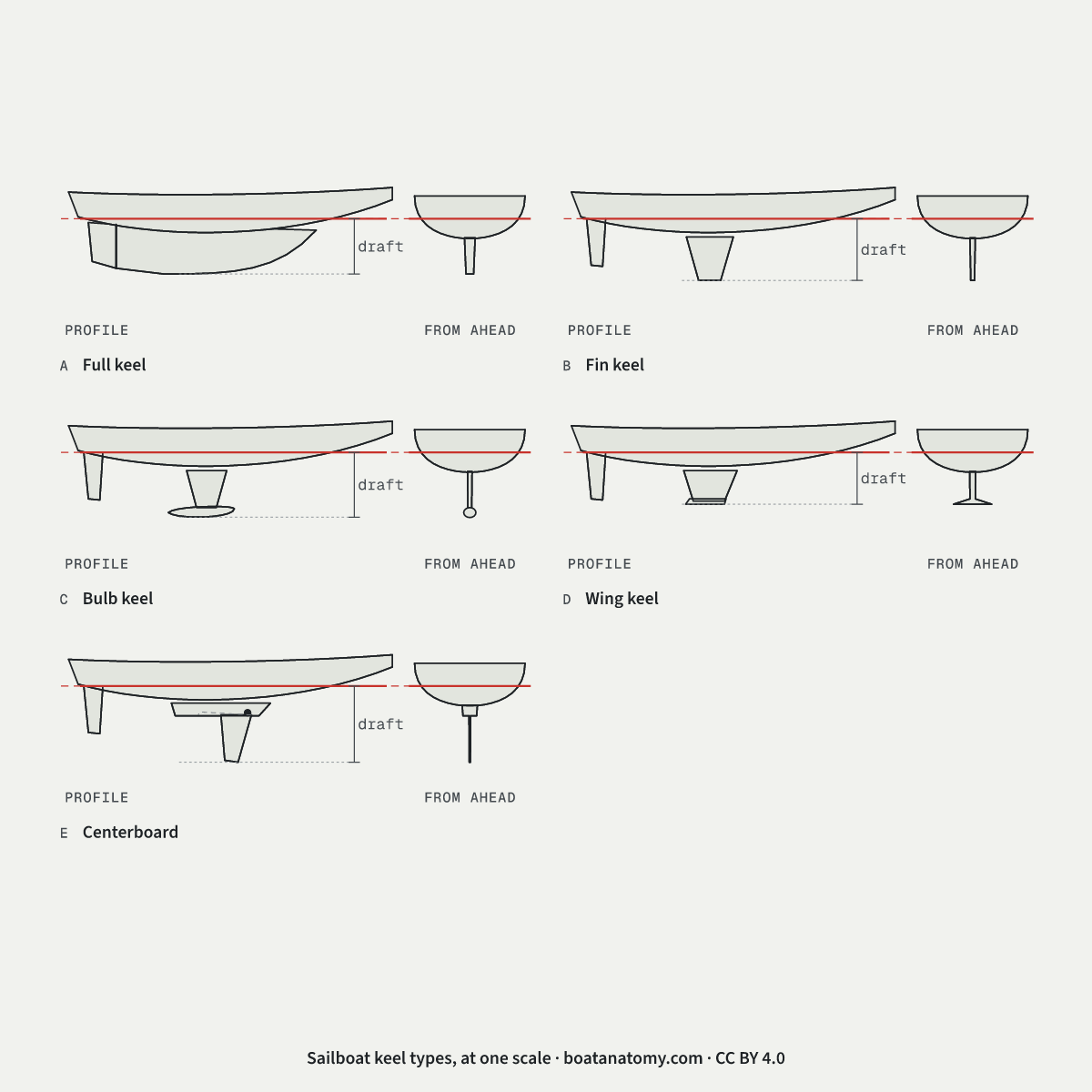
Five sailboat keel types under the same hull, drawn in profile at one scale.
-
A Full keel
The full keel on this sheet runs along much of the bottom of the hull, with the rudder hung on its after end.
Also: long keel
-
B Fin keel
A fin keel is a deep, thin, fixed fin under a sailboat’s hull that resists the sideways push of the wind on the sails.
-
C Bulb keel
On this sheet the bulb keel is a fin keel with a cigar-shaped bulb of lead at its tip.
Also: bulbed keel
-
D Wing keel
The wing keel on this sheet is a shallow fin with wings at its foot that spread the ballast sideways.
Also: winged keel
-
E Centerboard
A centerboard is a movable plate, pivoted at its forward end, that is raised or lowered through the keel of a sailboat.
Also: centreboard, drop keel, swing keel
Sailboat keel types One scale across the sheet Checked
Terms often confused
Keel (backbone)Keel (fin)
In the structural sense every hull has a keel along its bottom centerline; in the sailboat sense the keel is an appendage hanging below the hull.
KeelChine
The keel runs along the bottom centerline; the chines run along the corners where the bottom meets the sides.
Keel of a boat in more detail
“Keel” carries two meanings. Boating-course glossaries give the word both: the centerline backbone of the vessel, and an extension of the hull projecting below the bottom. The section drawing shows the first meaning and the sheet of five sailboat underbodies shows the second.
The keel as backbone
In the structural sense the keel runs fore and aft along the centerline at the bottom of the hull. On the V-bottomed section above it is the low point where the two halves of the bottom meet. The underside of the hull, from the keel out to the chines, is called the bottom.
The keel as a fin
On a sailboat the word also names the appendage hanging under the hull. A fin keel is a deep, thin, fixed fin under the hull, and it resists the sideways push of the wind on the sails. The sideways drift it works against is called leeway: the boat’s movement downwind, off the course it is steering. On many sailboats the keel also carries ballast, usually iron or lead, whose weight counters the wind force that heels the boat, or leans it over.
The sheet draws five types under the same hull and the same waterline, so you can compare their shape and depth directly.
A full keel is a long keel, a downward extension of the hull itself, running along much of the boat’s length; on the sheet its after end carries the rudder. The bulb keel is drawn as a fin with a cigar-shaped bulb of lead at its tip. A winged keel is a short keel with near-horizontal wings, or winglets, spreading sideways at its foot; Australia II, the 12-metre yacht that won the America’s Cup in 1983, sailed with one.
A centerboard is a movable plate, pivoted at its forward end, that is raised or lowered through the keel. A daggerboard slides straight up and down through a slot in the hull instead of pivoting. Bilge keels, or twin keels, are a pair of keels, one on each side of the hull near the turn of the bilge.
What the sheet leaves out
The sheet compares geometry only; how any of these keels sails depends on the whole boat. Draft is the one number you can read straight off it, since draft runs from the bottom of the keel up to the water surface.
Common questions
What does the keel of a boat do?
The keel is the centerline backbone of the hull. On a sailboat the keel also resists leeway, the sideways drift from the wind, and on many sailboats it carries iron or lead ballast that counters the wind’s heeling force.
Do powerboats have a keel?
Powerboats have a keel in the structural sense: the keel is the backbone along the bottom centerline of a hull. A fin-shaped keel hanging below the hull is the sailboat sense of the word.
What is the difference between a fin keel and a full keel?
A fin keel is a deep, thin fin under the hull. A full keel is a long keel, a downward extension of the hull itself, running along much of the boat’s length.
What is a wing keel?
A wing keel is a short keel with near-horizontal wings, or winglets, spreading sideways at its foot. Australia II sailed with one when it won the America’s Cup in 1983.
What is the difference between a centerboard and a daggerboard?
A centerboard and a daggerboard are both raised and lowered through the hull. A centerboard pivots at its forward end; a daggerboard slides straight up and down in a slot.
Print and practice
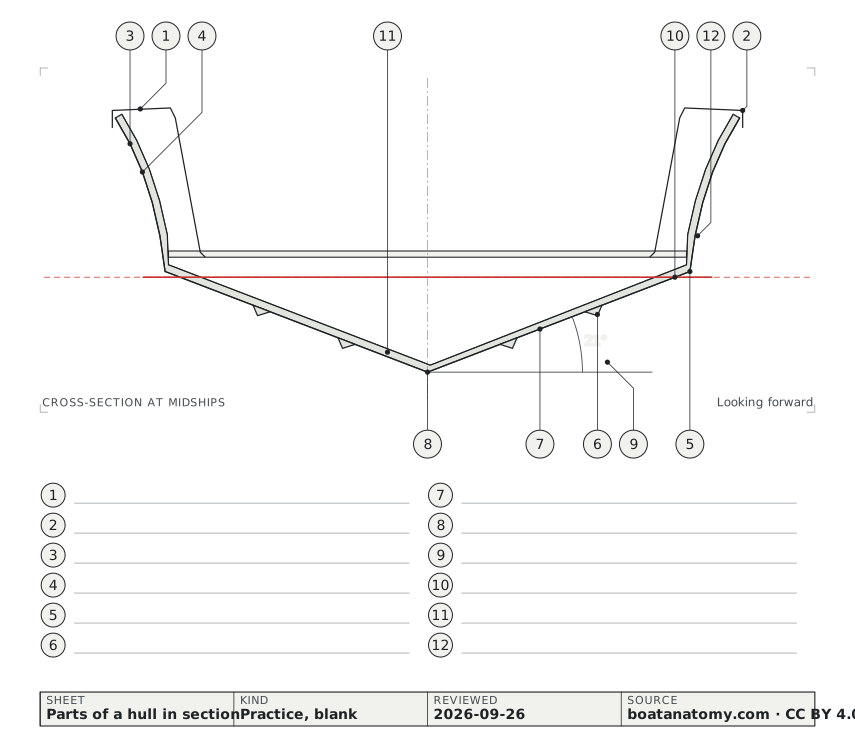
All worksheets- Parts of a hull in section Labeled sheet Blank sheet to fill in