Bow of a boat
Short answer: The bow is the front of a boat, its forward end. The stem is the forward edge of the hull, rising from the keel. In profile a bow is described by its stem: plumb, raked, spoon, clipper or, on many ships, bulbous.
Pick a part on the drawing, or a name in the list, to see what it is.
Which part is marked in red?
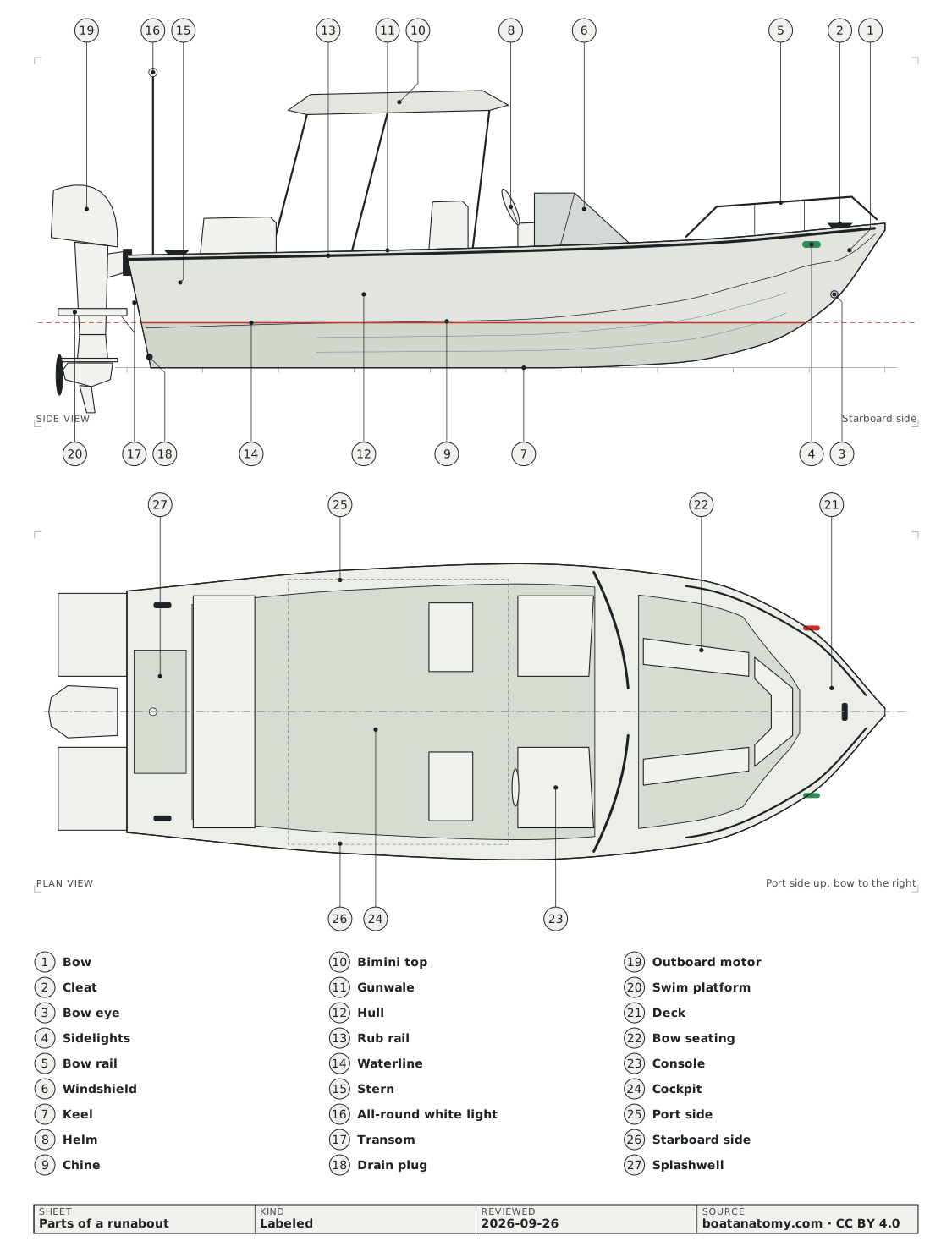
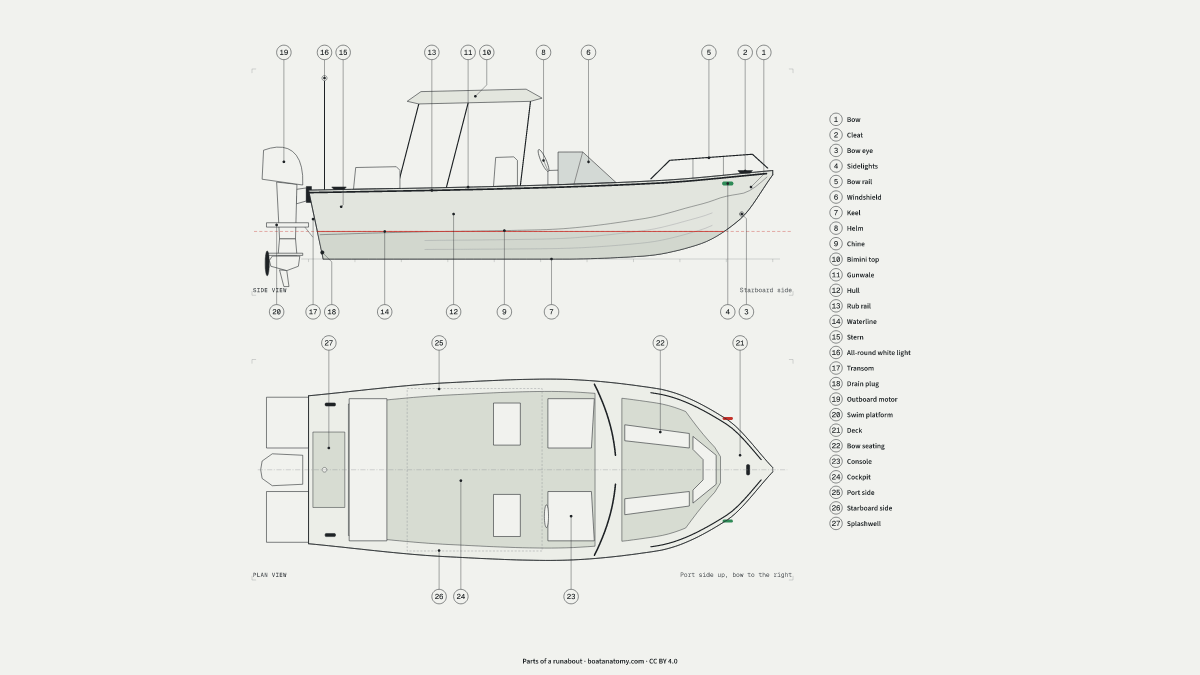
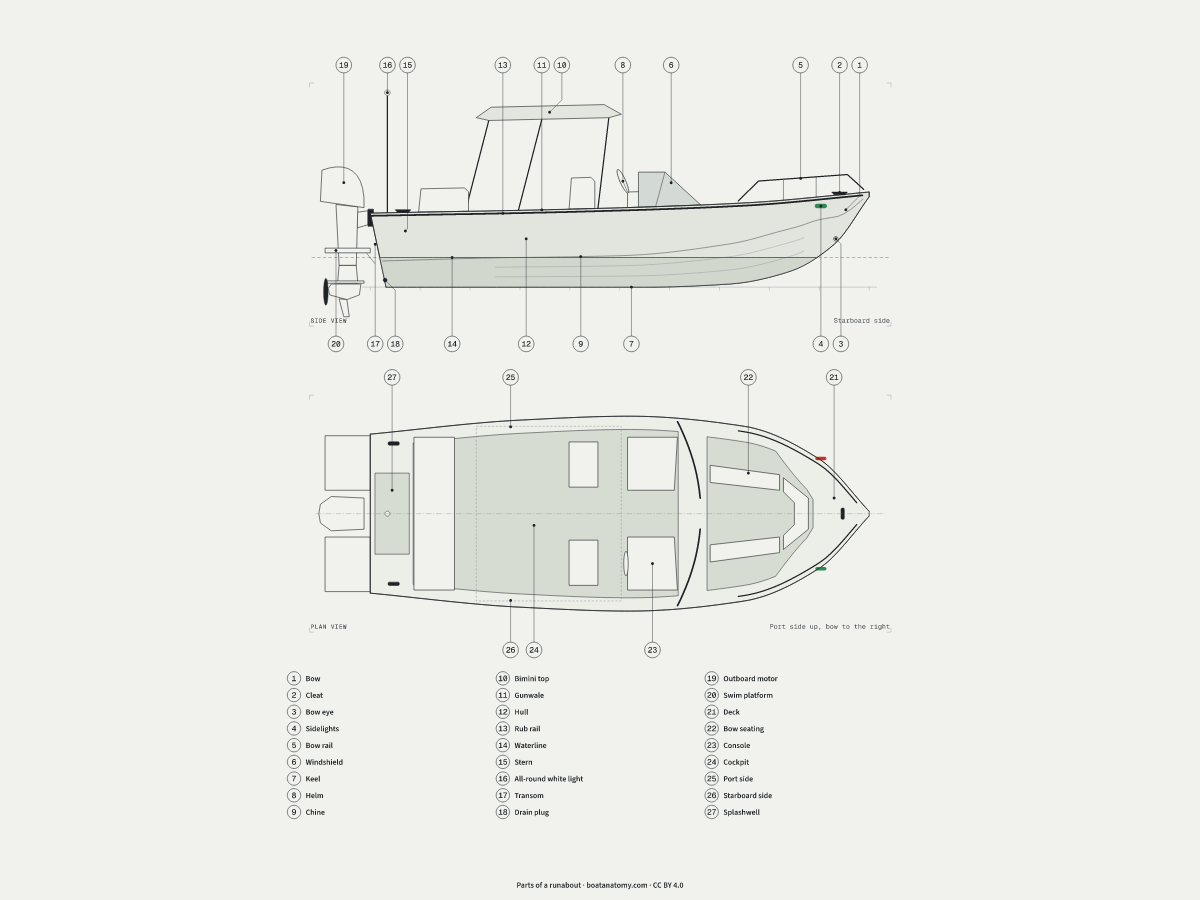
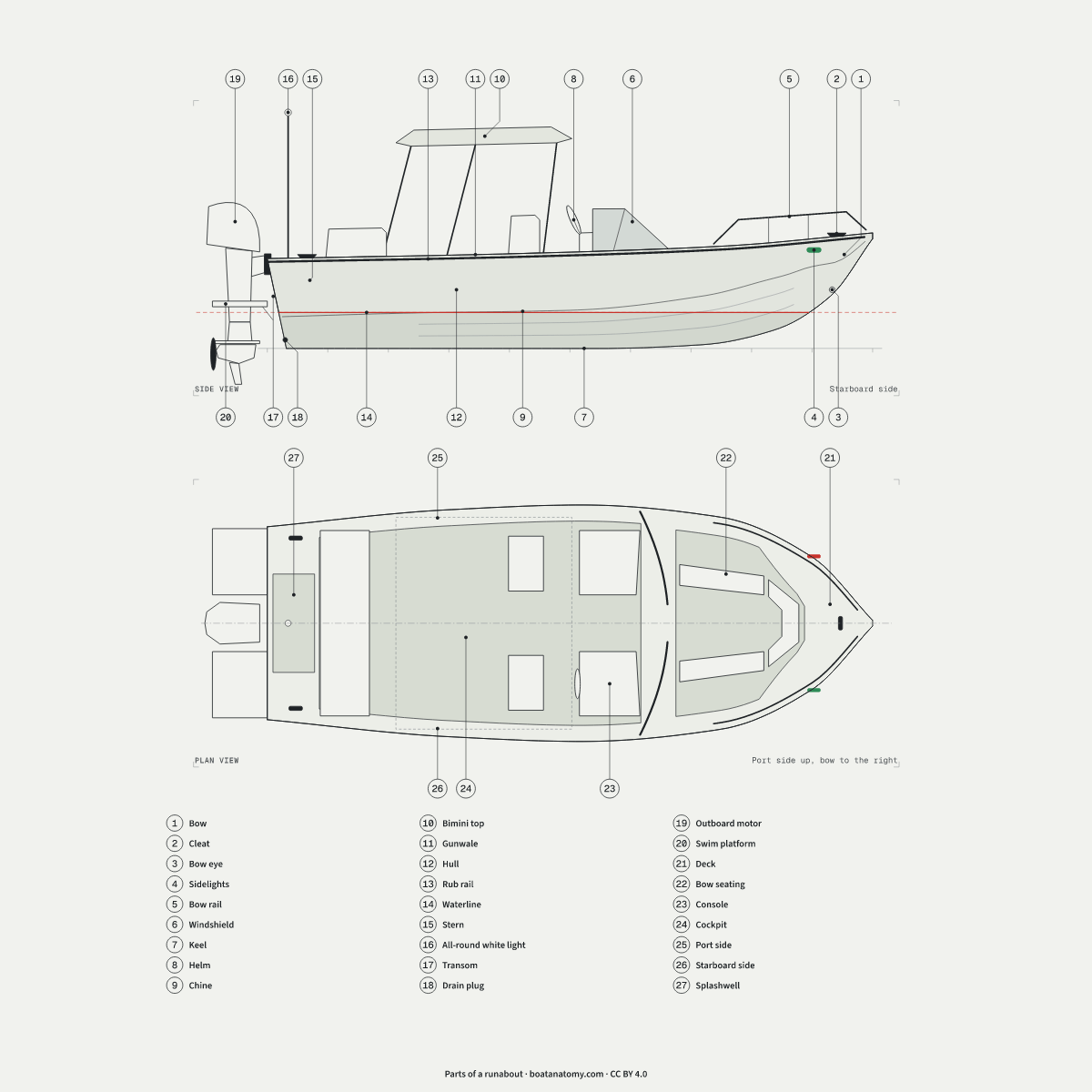
Parts of a runabout, side view and plan view Drawn to scale Checked
The 7 parts on this drawing
- Bow
The bow is the front, or forward end, of a boat.
Also called front, stem head
- Cleat
A cleat is a horned fitting on deck that lines are made fast to.
Also called bow cleat, stern cleat
- Bow eye
The bow eye is an eye bolt on the stem that gives an attaching point when the boat is on a trailer.
Also called trailer eye
- Sidelights
Sidelights are the navigation lights on each side of the bow: red on the port side, green on the starboard side.
Also called navigation lights, running lights, bow lights
- Bow rail
The bow rail is a metal guardrail fitted around the bow.
Also called bow pulpit
- Deck
The deck is the horizontal surface that closes in the top of the hull and forms the boat’s outside floor.
- Bow seating
A bowrider has an open seating area in the bow, in front of the helm.
Also called bow cockpit
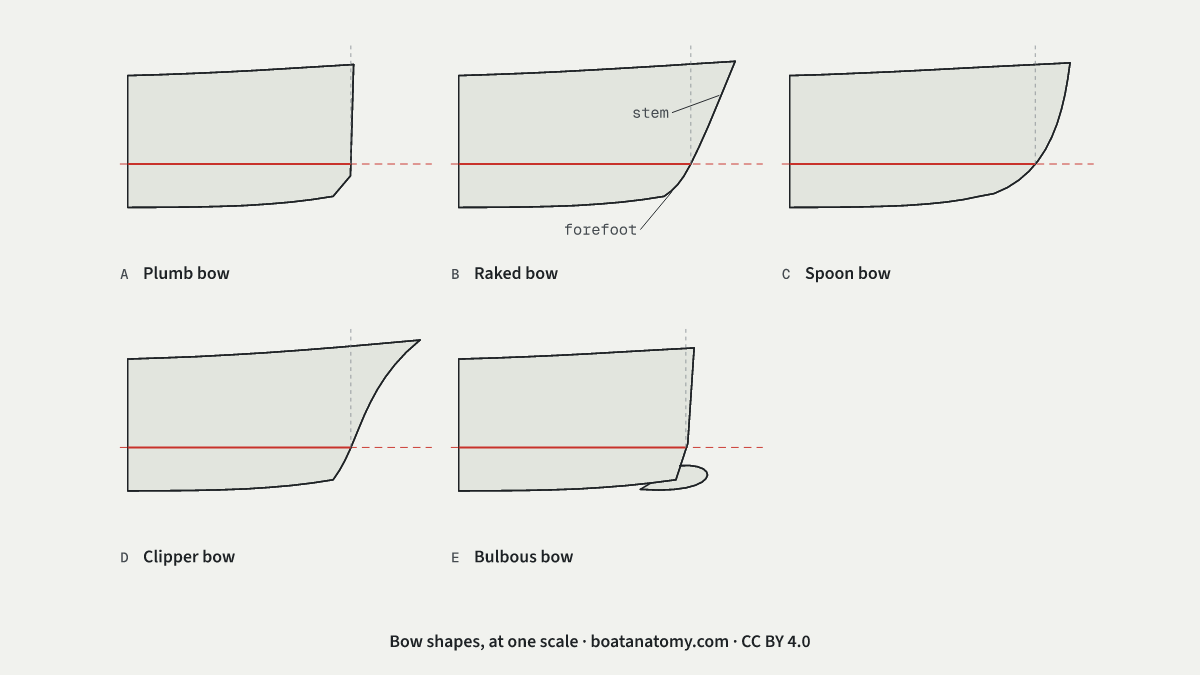
Bow shapes
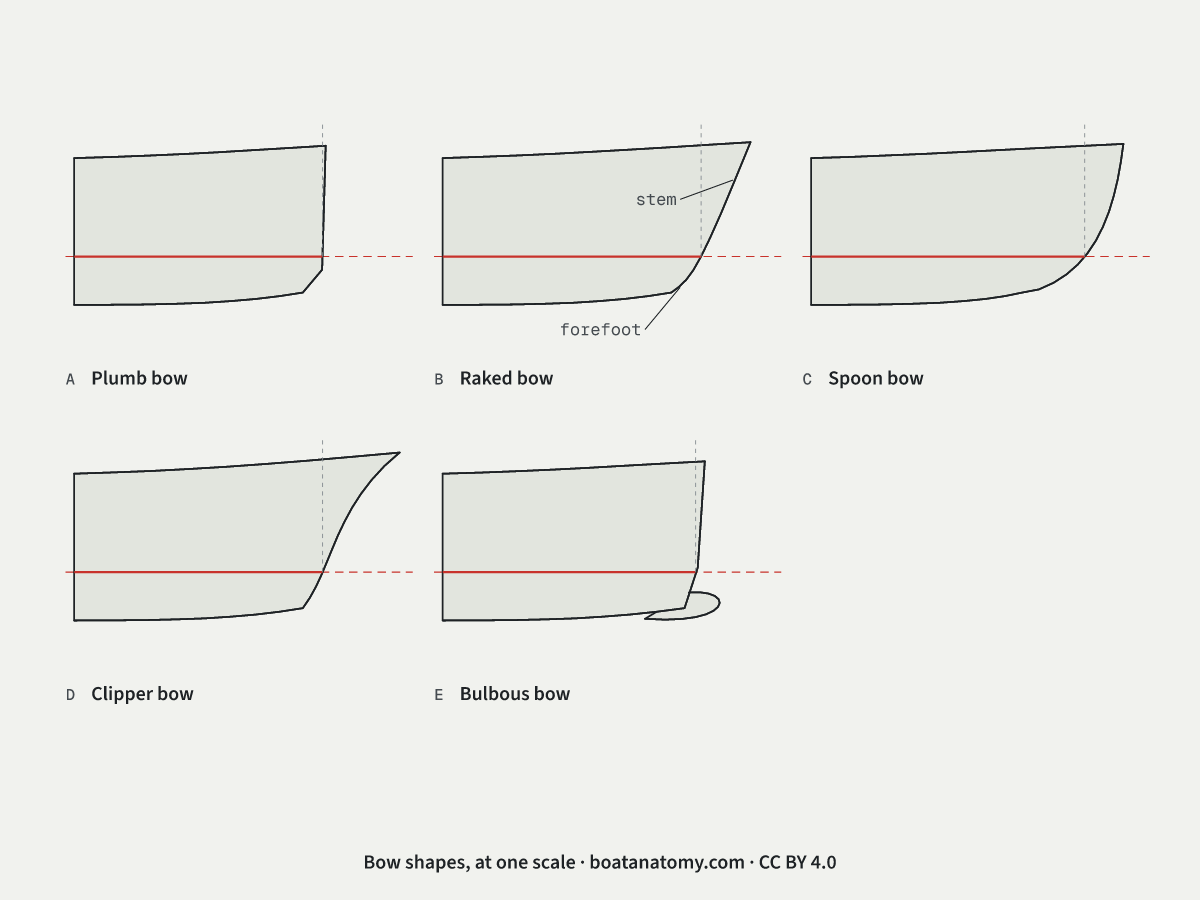
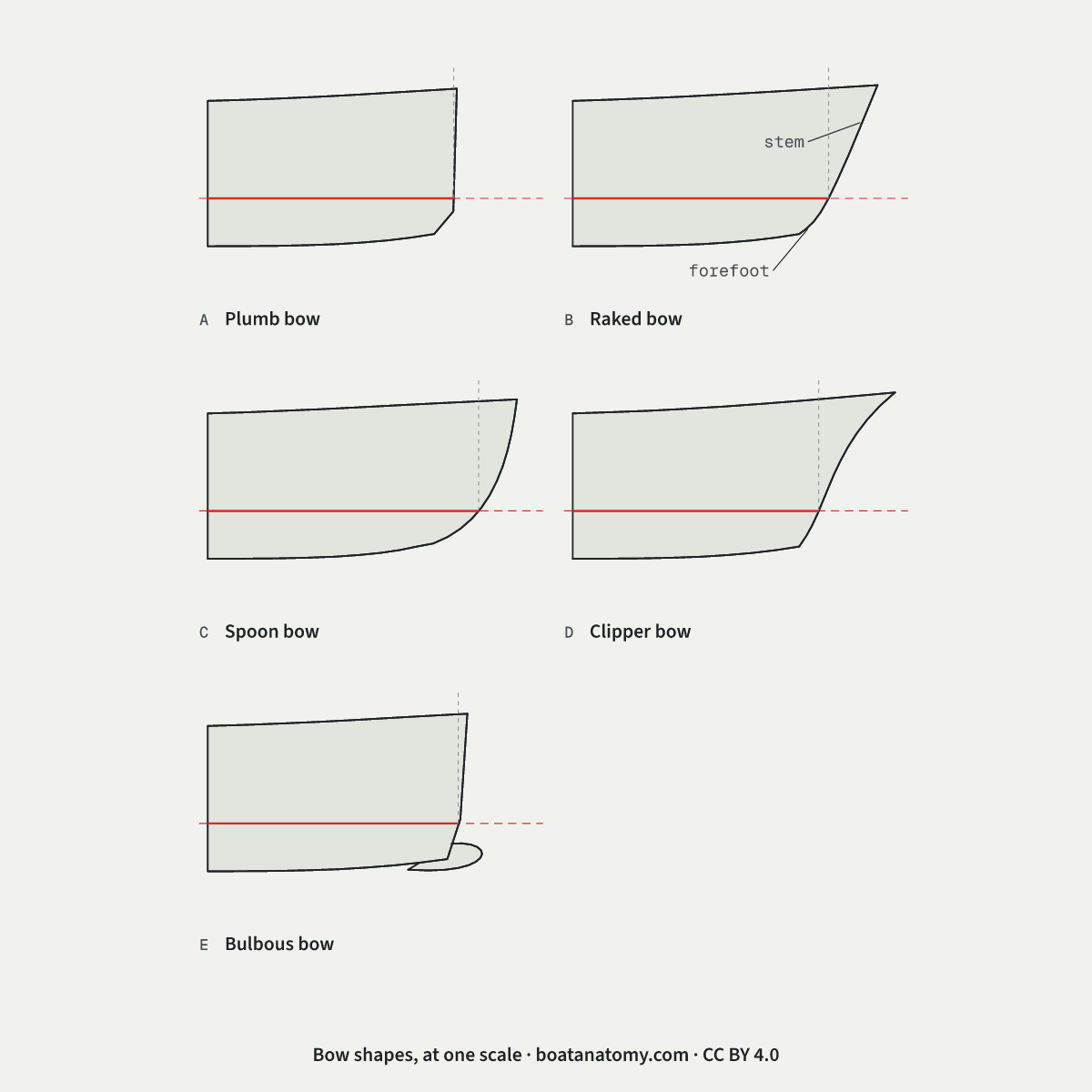
Five bow profiles drawn at one scale, waterline fixed, so only the stem changes.
-
A Plumb bow
A plumb bow has a stem that runs straight up and down, at or near vertical.
Also: vertical bow, straight stem
-
B Raked bow
A raked bow has a straight stem that slopes forward as it rises.
Also: raked stem
-
C Spoon bow
A spoon bow is an overhanging bow whose underside is curved like the bowl of a spoon.
-
D Clipper bow
A clipper bow’s stem forms a concave curve that projects forward above the waterline in a long overhang.
-
E Bulbous bow
A bulbous bow is a rounded swelling of the hull at the bow, below the waterline, found mostly on ships.
Also: bulb bow
Bow shapes One scale across the sheet Checked
Terms often confused
BowStemForefoot
The bow is the whole forward end; the stem is its forward edge, rising from the keel; the forefoot is the part of the bow where stem and keel meet.
BowStern
The bow is the front of the boat and the stern is the back; forward points toward one and aft toward the other.
Bow of a boat in more detail
The bow is the forward end of a boat, and any direction toward it is forward, or fore. A bow is shaped to move the hull through the water with little resistance and to keep water from regularly washing over the top. On the runabout drawing, the highlighted fittings are the ones found up at the bow of a small powerboat.
Bow, stem and forefoot
Three words describe the front of a hull at different scales. The bow is the whole forward region. The stem is its forward edge, rising from the keel to the top of the hull, and the forefoot is the part of the bow where the stem meets the keel. On the side view you can follow the stem from the deck down past the red waterline to the forefoot.
Fittings at the bow
The bow eye, an eye bolt on the stem, gives an attaching point when the boat sits on a trailer. Higher up, the bow rail is a metal guardrail around the foredeck, and a horned cleat gives the mooring or anchor line something to be made fast to. The sidelights on each side of the bow show red to port and green to starboard. On this boat type, the open seating area in the bow, in front of the helm, is what puts the “bow” in bowrider.
Five bow profiles
The sheet draws five bows on hulls of one length, waterline fixed, so the differences sit in the stem alone. A plumb bow’s stem stands straight up and down. A raked stem is straight and slopes forward as it rises. A spoon bow overhangs the water, its underside curved like the bowl of a spoon, while a clipper bow reaches forward above the waterline in a hollow, concave curve. The bulbous bow belongs mostly to ships: a rounded swelling of the hull at the bow, below the waterline.
Seen from ahead, many bows also flare. Flare is the outward slant of the hull sides as they rise from the waterline, and in the hull atlas it shows as forward sections that widen toward the deck.
Common questions
What is the front of a boat called?
The front of a boat is the bow. A direction toward the bow is forward, and one toward the stern is aft.
What does the bow of a boat do?
The bow of a boat is shaped to move the hull through the water with little resistance, and built high enough to keep water from regularly washing over the top.
What is the pointed front edge of a boat called?
The forward edge of the hull is the stem. Where the stem meets the keel, low in the bow, is the forefoot.
What is the bulb at the front of a ship called?
The bulb at the front of a ship is a bulbous bow: a rounded swelling of the hull at the bow, below the waterline. Bulbous bows are found mostly on ships.
What is the ring at the bottom of the bow for?
The ring at the bottom of the bow is the bow eye, an eye bolt on the stem. It gives an attaching point when the boat is on a trailer.
Print and practice
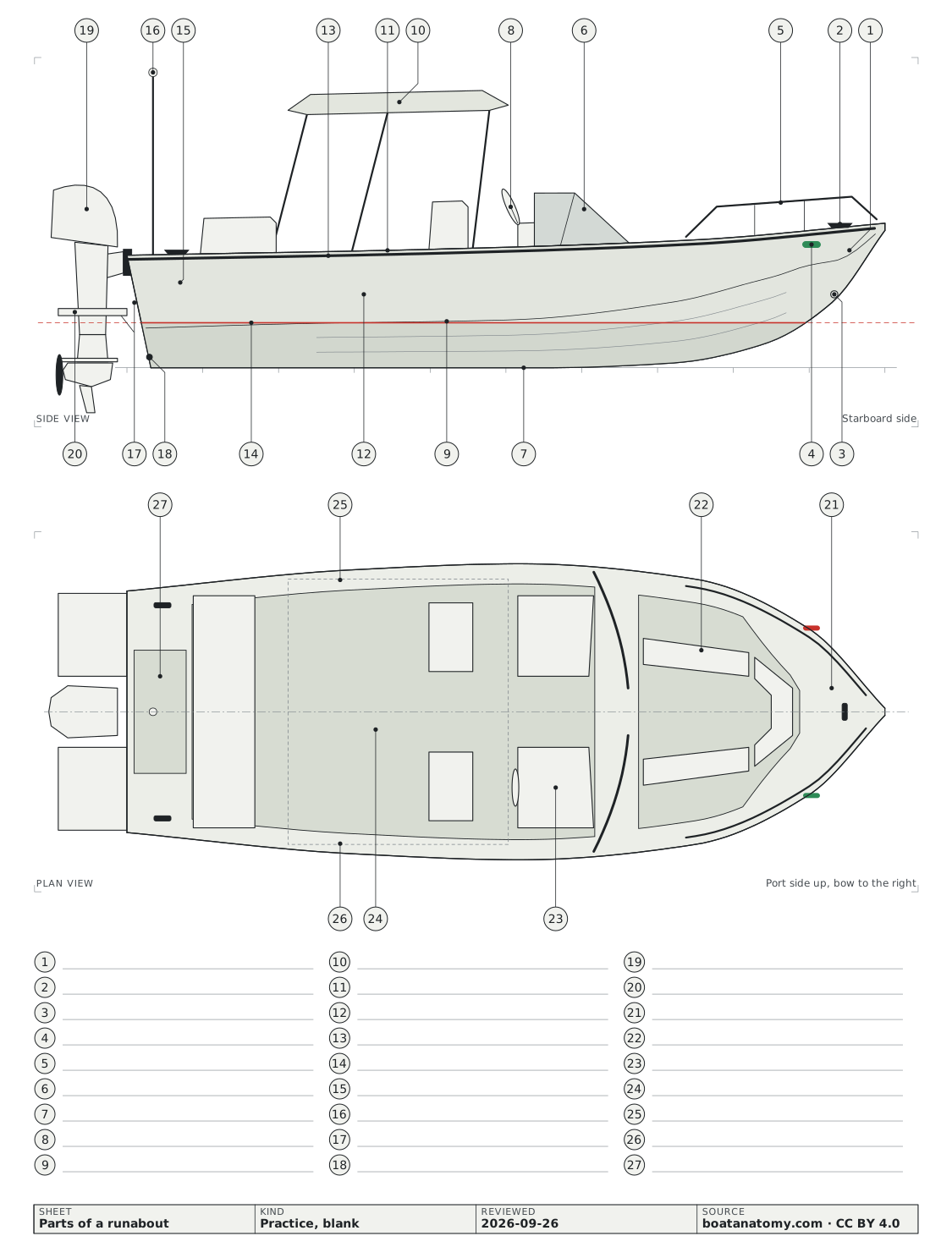
All worksheets- Parts of a runabout Labeled sheet Blank sheet to fill in