Gunwale
Short answer: The gunwale, pronounced “gunnel”, is the upper edge of a boat’s side. Dictionaries also accept gunnel as a spelling. Seen from the side, the line the gunwale follows from bow to stern is the sheer.
Pick a part on the drawing, or a name in the list, to see what it is.
Which part is marked in red?
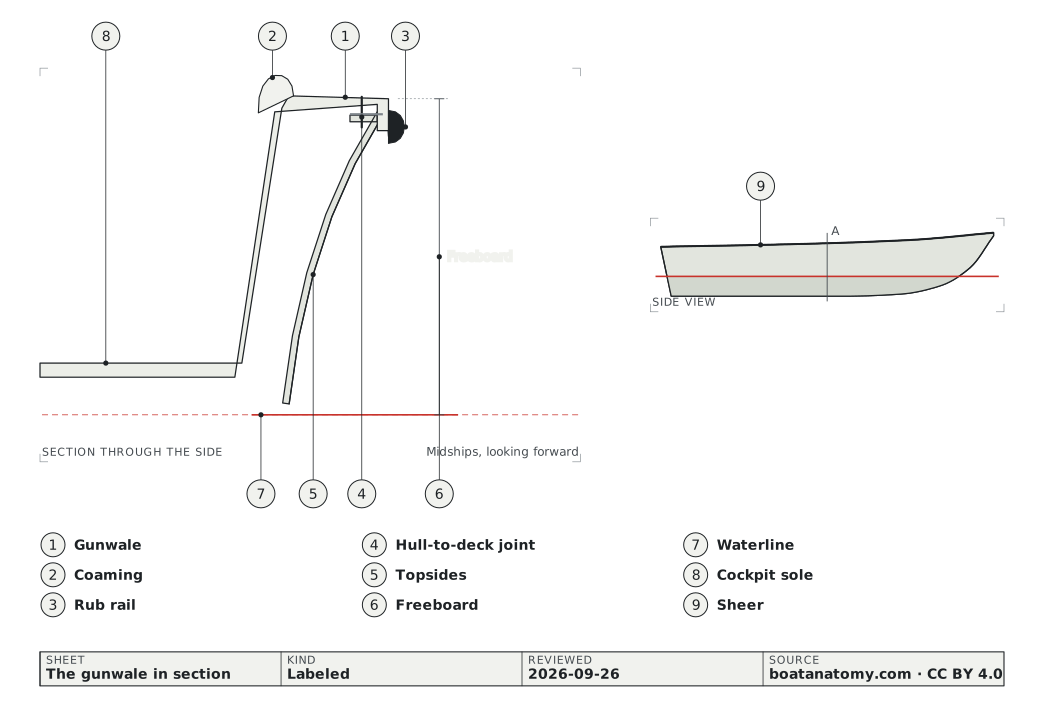
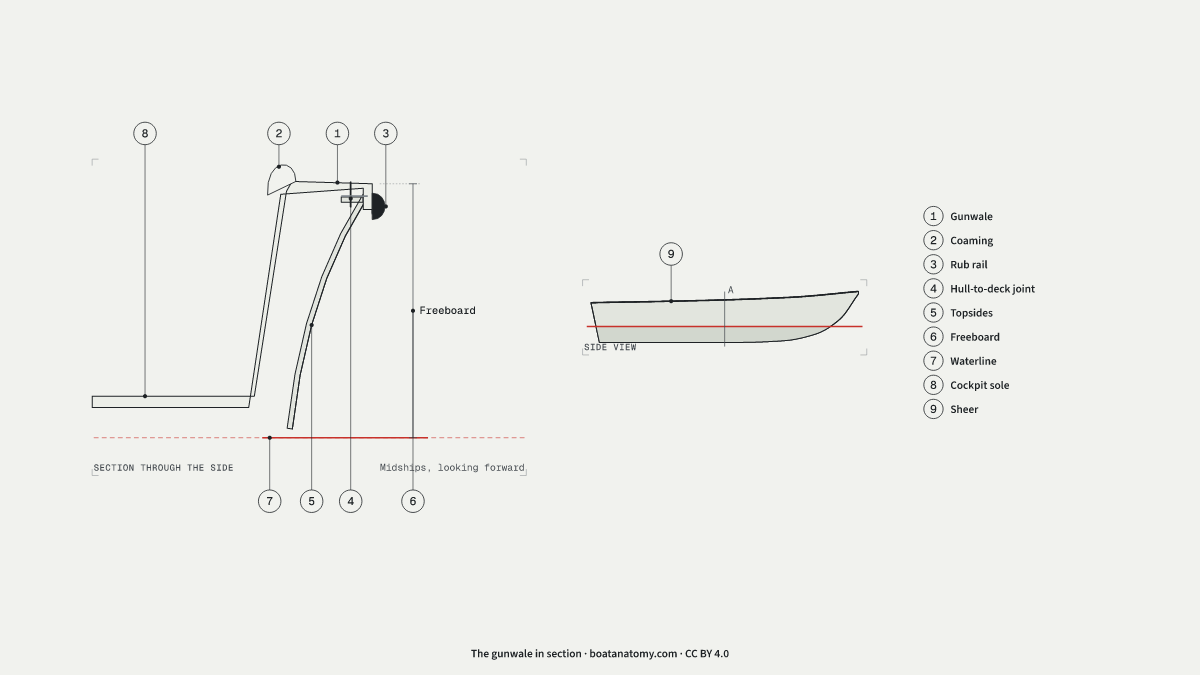
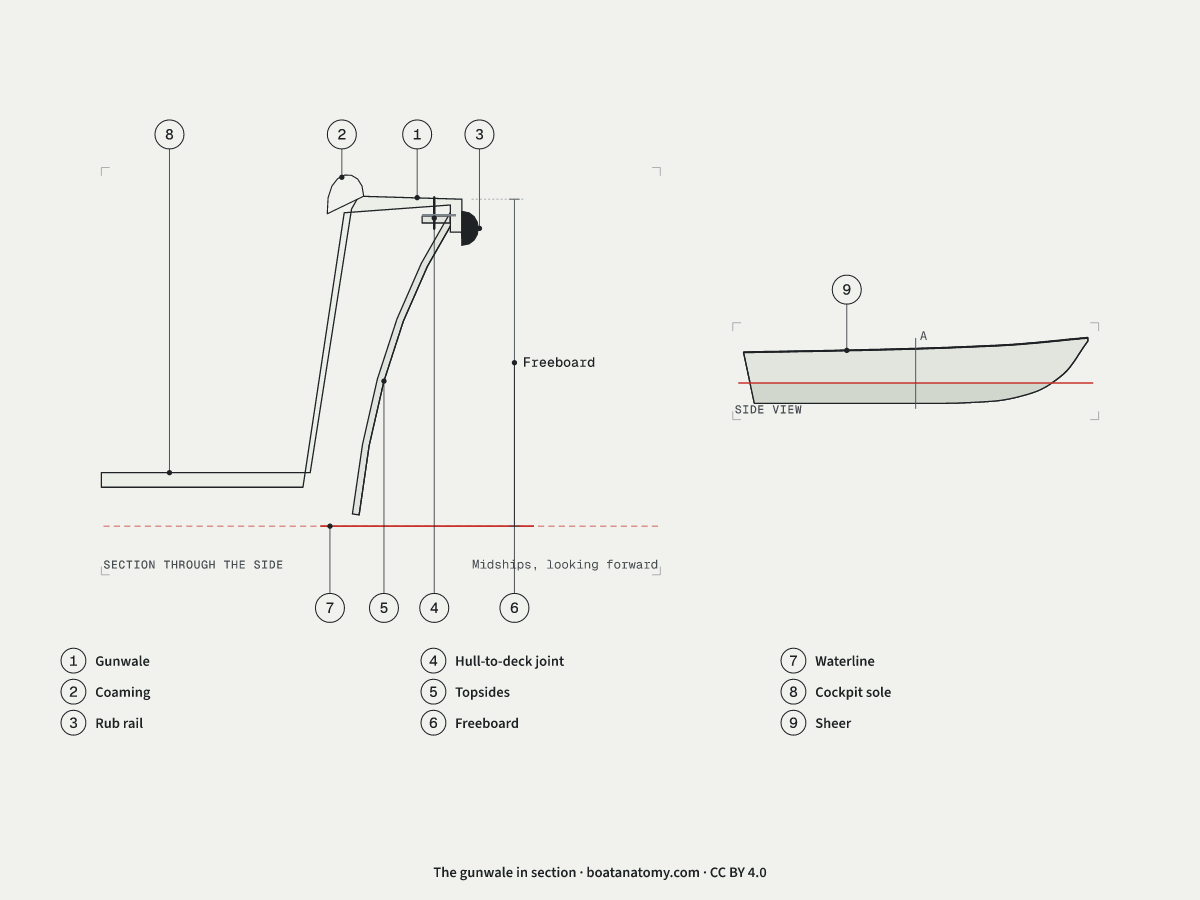
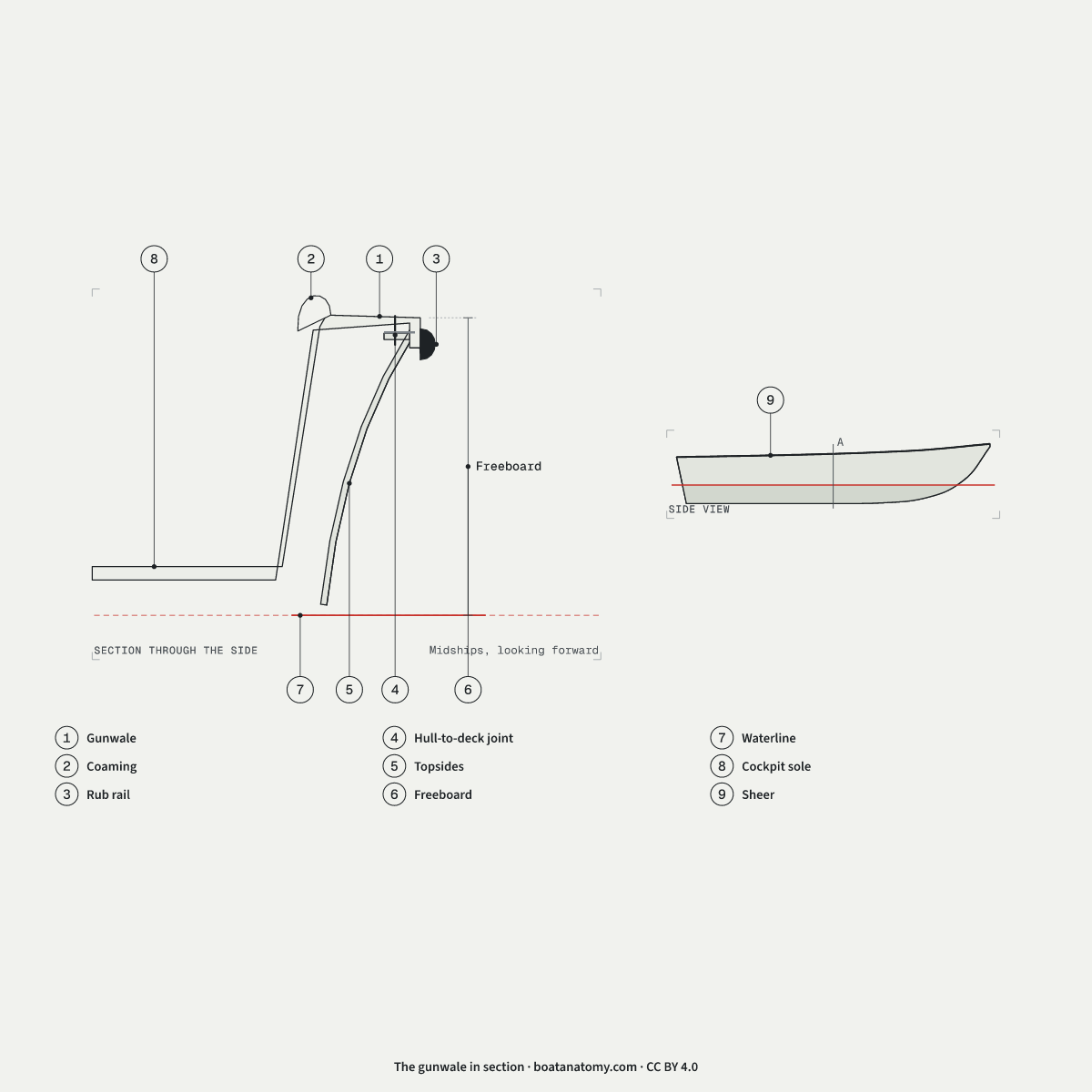
The gunwale in section, section through the side and side view Drawn to scale Checked
The 9 parts on this drawing
- Gunwale
The gunwale, pronounced “gunnel”, is the upper edge of the boat’s side.
Also called gunnel
- Coaming
A coaming is a raised edge around a cockpit or hatch opening that helps keep water out.
Also called cockpit coaming
- Rub rail
The rub rail is a permanent protective strip along the outside of the hull, often running its whole length, that does the job of a fender.
Also called rubrail, rubbing strake
- Hull-to-deck joint
On this drawing the hull and the deck are separate moldings, joined at the gunwale in the hull-to-deck joint that the rub rail covers.
Also called hull-deck joint
- Topsides
Topsides are the sides of the hull between the waterline and the gunwale.
- Freeboard
Freeboard is the height of the boat’s side above the water: the depth of the hull minus its draft.
- Waterline
The waterline is the line where the surface of the water meets the hull.
Also called WL
- Cockpit sole
On the drawing, the cockpit sole is the floor of the cockpit, set below the deck.
Also called sole, floor
- Sheer
The sheer is the topmost line of the boat’s side, seen from the side as a curve from bow to stern.
Also called sheer line, sheerline
Terms often confused
GunwaleSheerRub rail
The gunwale is the physical top edge of the side, the sheer is the curve that edge makes seen from the side, and the rub rail is a protective strip fixed outside the hull.
TopsidesFreeboard
Topsides are the hull sides above the waterline; freeboard is the height of those sides above the water.
Gunwale in more detail
The gunwale is the upper edge of a boat’s side, and dictionaries give its pronunciation as “gunnel” and accept gunnel as a spelling too. The word joins gun and wale, a plank along a ship’s side, from its early use as a support for guns, and it is sometimes misspelled “gunwhale”. The drawing cuts through the side of the runabout amidships so you can see that edge end-on, with the parts that crowd around it.
Edge, line and strip
Three words sit within a hand’s width of each other here. The gunwale is the physical edge you can put your hand on. The sheer is the curve that edge traces along the boat, seen from the side, and the small side view marks it from bow to stern. The rub rail is a separate protective strip fixed along the outside of the hull, doing the job of a fender; on this boat it sits a little below the gunwale.
Inside the section
An industry guide notes that the gunwale typically sits where the deck meets the hull. The drawing shows the hull and deck as separate moldings, joined at the gunwale in a hull-to-deck joint that the rub rail covers from outside. Boating references describe the gunwale as usually stiffened, and on some boats widened to carry fittings such as cleats and rod holders.
Inboard, the deck steps down into the cockpit. A raised coaming around that opening helps keep water out, and the drawing sets the cockpit floor, the sole, below the deck. Outboard and below the gunwale, the hull side above the waterline is the topsides. The height of that side above the water is the freeboard, drawn here as a dimension.
On a canoe
On a canoe, the gunwales are the reinforced rails along the top edges, often built from an inwale inside and an outwale outside.
Common questions
How do you pronounce gunwale?
Gunwale is pronounced “gunnel”. Dictionaries give that pronunciation and list gunnel as an accepted spelling as well.
Why is it called a gunwale?
The word gunwale joins gun and wale, a plank along a ship’s side, from the gunwale’s early use as a support for guns.
What is the difference between a gunwale and a rub rail?
The gunwale is the upper edge of the side itself. The rub rail is a permanent protective strip along the outside of the hull that does the job of a fender; on the drawing it runs a little below the gunwale.
Where is the gunwale on a boat?
The gunwale runs along the top of each side of a boat, from bow to stern. An industry guide notes it typically sits where the deck and the hull meet.
Is the gunwale the same as the sheer?
The gunwale and the sheer are different things. The gunwale is the edge you can touch; the sheer is the line that edge traces along the boat, seen from the side.
What are the gunwales on a canoe?
The gunwales on a canoe are the reinforced rails along the top edges of the hull, often built from an inwale inside and an outwale outside.
Print and practice
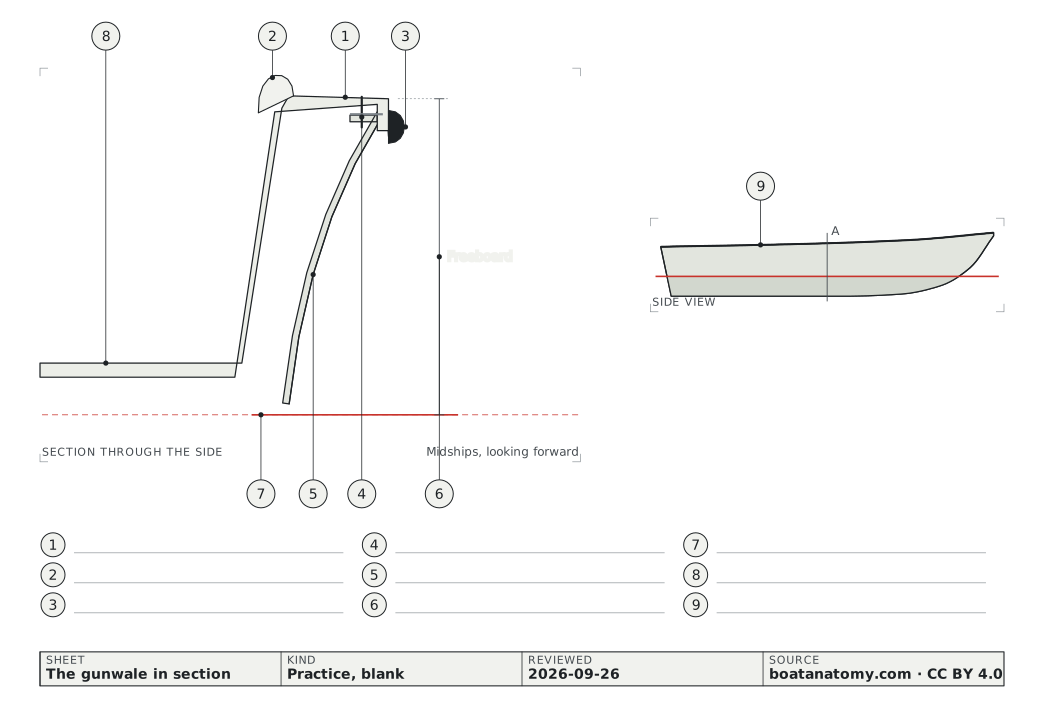
All worksheets- The gunwale in section Labeled sheet Blank sheet to fill in